

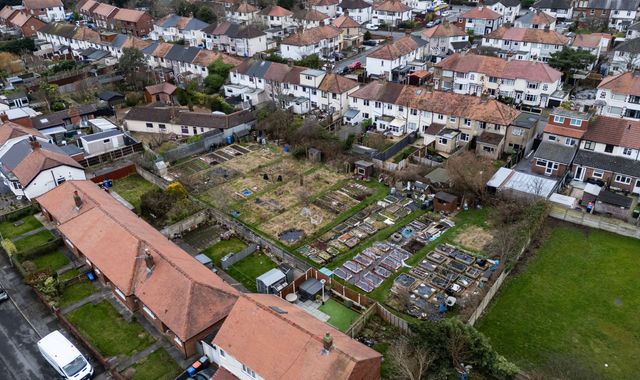
Dozens of residents living near a major chemical factory have discovered high levels of a cancer-causing "forever chemical" in their blood, according to lawyers.
The firm Leigh Day said 49 people in Thornton-Cleveleys, Lancashire, had been tested, of whom 69 per cent had elevated levels of "PFOA" - putting put them at risk of developing health problems such as high cholesterol and certain cancers.
The residents live close to an industrial site where PFOA was used until 2012, operated by ICI chemicals until 1992 and now run by AGC Chemicals.
Sam Hammond, 48, has lived close to the Hillhouse manufacturing site for 21 years and fears she could have poisoned her children through breastfeeding.
"There's not much research out there but from everything that I've been trying to find out about it we know that it's transferred through breastfeeding, we know that it can be passed through the placenta," she said.
All her children are neurodiverse but "there is no family history of that," she added. "One of my children has an extra chromosome."
PFOA (perfluorooctanoic acid) is classified as a carcinogen and is part of the PFAS (per- and polyfluoroalkyl substances) group of chemicals, so-called "forever chemicals" because they can take centuries to break down in the environment.
The Environment Agency and the local authority have been investigating the Hillhouse manufacturing site since 2024 to determine historic contamination and any risks.
Residents have since been told to be cautious about eating home-grown produce, and two allotments have been temporarily closed.
More from Sky News:
Teenagers to be offered new vocational GCSEs
Nearly half of women aged 16-24 experience online violence - report
PFOA was banned in Britain in 2020 after the World Health Organization (WHO) classed it as a Group 1 carcinogen, meaning it poses risks to humans and animals.
Law firm Leigh Day said it has been working with Dr Dave Megson at Manchester Metropolitan University (MMU) and Watershed Investigations to investigate chemical pollution in the area.
The tests they arranged showed levels of PFOA above 20 nanograms per millilitre in 69% of those tested, putting them in the high-risk category, with the overall average at 26 nanograms per millilitre.
A spokesperson for AGC Chemicals Europe, Ltd. said it understood the concerns residents might have after testing.
They pointed to the UK government's position that PFAS blood testing does not predict future health problems.
"For these reasons, PFAS biomonitoring is not currently recommended through the NHS or private blood tests," they said, adding the site has been used for chemical manufacturing for over a century, and by various operators before them.
They added: "Since the wider multi-agency investigation is still ongoing and no formal determination of land contamination has been made under Part 2A of the Environmental Protection Act, we cannot speculate on future outcomes or next steps."
The Environment Agency said it was continuing to investigate the case to better understand the nature and extent of the contamination and what risk that might pose.
Leigh Day partner Sarah Moore called the blood test results "hugely concerning" and urged the government to deliver on promised action on PFAS contamination.
She said the Thornton Cleveleys community was "paying the price" in terms of potential health effects, restrictions on what they can grow and eat locally, and the value of their properties.

(c) Sky News 2026: High levels of 'forever chemical' causing cancer found in blood of residents living near factor
 NHS trust prepared to review 4,500 breast cancer cases over more than a decade after failings
 Anti-migrant activist Danny Tommo charged with criminal damage over 'boat slashing'
 Anthony Joshua-Tyson Fury fight to take place in Cardiff on 11 December
 Premier League in joint call for FIFA reform amid Infantino crisis
 Paedophile who used AI to undress children was bailed to flat overlooking playground